
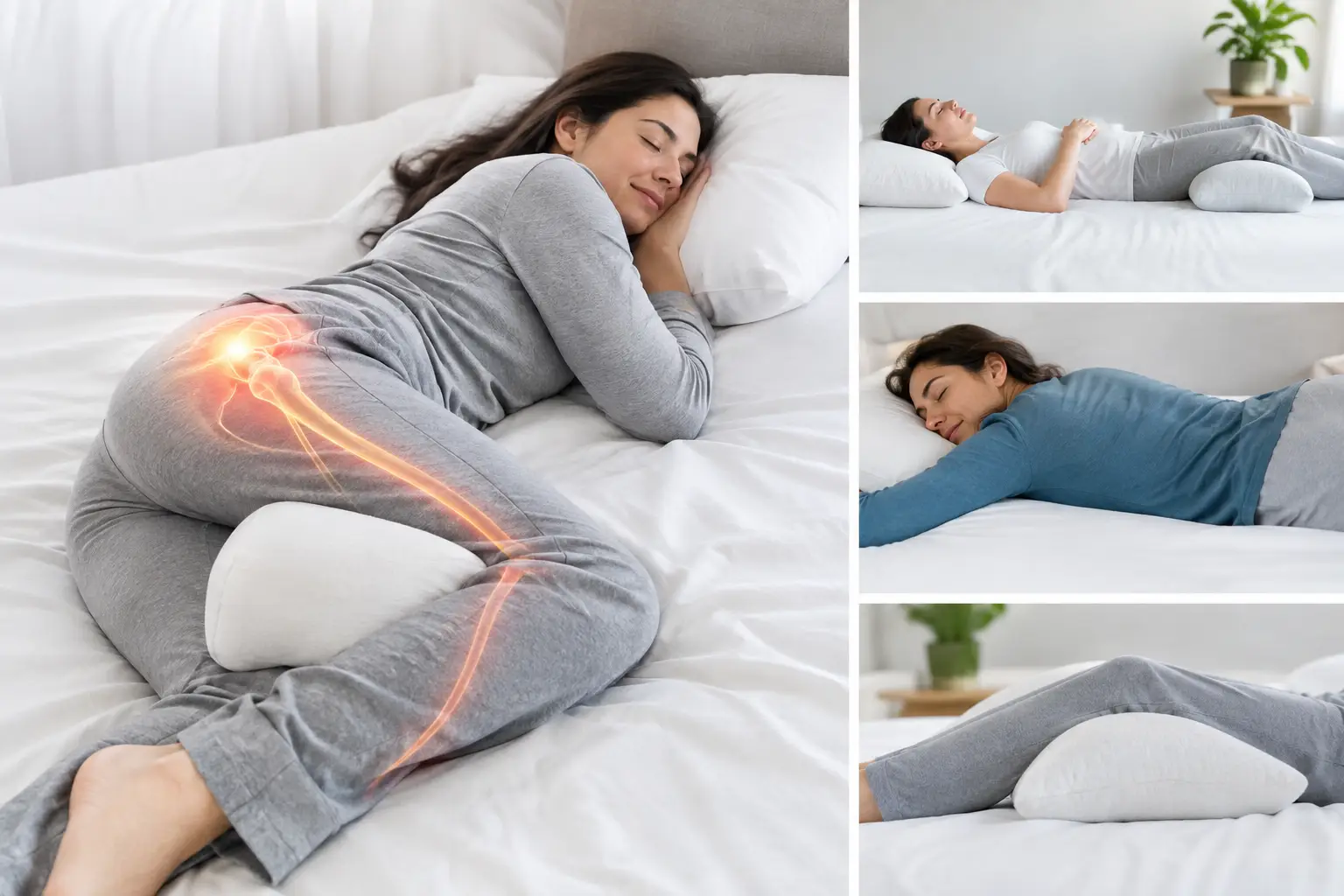
A sciatica flare can make bedtime feel like a long search for one position that does not send pain down your hip, thigh, calf, or foot. If you are searching for the best sleeping positions sciatica pain can tolerate, the goal is not to force a perfectly straight posture. It is to reduce strain on the irritated nerve and help your lower back settle enough for restorative sleep.
Sciatica is not a diagnosis by itself. It describes symptoms that occur when the sciatic nerve, or one of the nerve roots that contributes to it, becomes irritated or compressed. A disc problem, spinal narrowing, arthritic changes, muscle tension, or an injury can all play a role. The sleeping position that feels best depends on what is driving your symptoms, which is why a position that helps one person may aggravate another.
Best Sleeping Positions for Sciatica
Side sleeping with a pillow between the knees
For many people, side sleeping is the most comfortable option. Lie on the side that causes less pain, bend your knees slightly, and place a firm pillow between them. The pillow keeps your top leg from dropping forward and twisting your pelvis. That small adjustment can reduce pulling through the low back, hip, and sciatic nerve pathway.
Your pillow should be thick enough to keep your knees about hip-width apart without forcing your top hip upward. A body pillow can work especially well because it supports the knees and gives your arms something to rest on. If there is a gap between your waist and the mattress, try placing a small rolled towel there for gentle support.
Avoid curling into a tight ball. A mild bend at the hips and knees is usually more comfortable than a deep fetal position, which can leave your back stiff by morning. That said, some people with a disc-related flare feel better with slightly more flexion. Comfort and symptom response should guide the adjustment.
Sleeping on your back with support under the knees
Back sleeping can be a very effective position when it does not increase leg symptoms. Lie flat with a pillow or wedge beneath both knees. Elevating the knees takes some of the arch out of the lower back and can reduce pressure on sensitive spinal structures.
A medium-firm pillow is often enough, but some people prefer a foam wedge that supports from the knees toward the calves. Keep your head pillow low enough that your chin is not pushed toward your chest. If your mattress feels too firm, a thin cushion under your knees and calves may be more comfortable than a bulky stack of pillows.
This position is often useful after a physically demanding workday, a long drive, or a car accident injury that has left the low back guarded and sore. However, if lying flat makes pain travel farther down the leg, switch positions rather than trying to push through it.
A reclined position for certain flare-ups
Some patients get temporary relief when they sleep slightly reclined, such as in an adjustable bed or a supportive recliner. This position bends the hips and knees while supporting the upper body, which may be more comfortable for people whose symptoms worsen when lying completely flat.
Reclined sleep is not the best long-term answer for everyone. A recliner that allows your neck to fall forward or your body to slide can create new stiffness. If you use one during a severe flare, support your neck and low back, and treat it as a short-term comfort strategy while you address the cause of your pain.
Positions That Commonly Make Sciatica Worse
Stomach sleeping is often the hardest position on an irritated lower back because it can increase the low-back arch and force the neck to rotate for hours. If you cannot fall asleep any other way, place a thin pillow under your lower abdomen and pelvis to reduce the arch, and use a very thin head pillow or no head pillow if that is comfortable for your neck.
Sleeping on your side with the top leg hanging forward can also trigger symptoms. It twists the pelvis and may strain the low back overnight. Crossing one leg over the other, sleeping with a knee pulled sharply toward the chest, or using a pillow that is too flat between the knees can create a similar problem.
The position itself is only part of the issue. A mattress that sags under the hips can leave the spine unsupported, while an overly hard mattress may create pressure at the shoulder and hip that makes side sleeping difficult. There is no single mattress firmness that works for every case of sciatica. In general, you want a surface that keeps your trunk supported without creating painful pressure points.
Build a Pillow Setup That Keeps You Comfortable
Pillows are not a cure for sciatica, but they can make a meaningful difference in how your body is positioned for six to eight hours. Start with one change at a time so you can tell what actually helps.
For side sleeping, use a pillow between the knees and make sure your head pillow fills the space between your shoulder and neck. Your head should stay level with the rest of your spine, not angled down toward the mattress or lifted too high. Holding a pillow in front of your chest can also stop the upper body from rolling forward.
For back sleeping, support both knees rather than only one. Supporting one leg can rotate the pelvis and create uneven tension. If you have a pronounced space beneath the small of your back, a thin towel may provide gentle support, but do not use a large lumbar roll that forces your back into an uncomfortable arch.
If pain wakes you up, move slowly. Roll onto your side first, bring your legs over the edge of the bed together, and use your arms to push yourself upright. This log-roll approach limits sudden twisting through the low back. It is especially helpful first thing in the morning, when muscles and joints are often stiff.
What to Do Before Bed When Sciatica Is Active
The best sleep position works better when your back is not entering bed already tense from hours of sitting, lifting, standing, or driving. A brief, gentle routine can help. Try a short walk around the house, slow diaphragmatic breathing, or light movement that has been comfortable for you during the day. Avoid aggressive stretching that reproduces sharp pain, numbness, or tingling down the leg.
Heat can relax tight muscles for some people, while others with a fresh, inflamed injury prefer a cold pack. Use either for a short period with a cloth barrier to protect your skin, and do not fall asleep with a heating pad or ice pack in place.
Pay attention to patterns. If sitting all evening makes the pain worse, break it up with brief standing or walking. If bending forward triggers symptoms, avoid folding deeply over laundry baskets, low tables, or your phone before bed. Small changes in the hours before sleep can reduce the intensity of a nighttime flare.
When Sciatica Needs Professional Evaluation
Home positioning is appropriate for mild symptoms, but persistent sciatica deserves an assessment. Pain that repeatedly interrupts sleep, travels below the knee, or limits walking, working, and daily activities may respond better when the underlying movement and spinal issues are addressed.
Seek urgent medical care for new loss of bladder or bowel control, numbness in the groin or inner thighs, significant or worsening leg weakness, fever with back pain, or pain following a serious fall or accident. These symptoms need prompt evaluation rather than another pillow adjustment.
For non-emergency pain that is lingering or recurring, a clinician can help identify aggravating movements and build a plan around your specific symptoms. At Honolulu Pain Relief Center, patients can receive individualized non-surgical care that may include chiropractic treatment, massage therapy, spinal decompression, rehabilitative techniques, or other appropriate therapies based on their condition.
A comfortable night may start with a pillow between your knees or beneath them, but lasting relief usually comes from paying attention to what your symptoms are telling you. Choose the position that reduces leg pain rather than simply the one you have always used, and get help when sciatica keeps taking sleep, movement, and normal life off the table.