
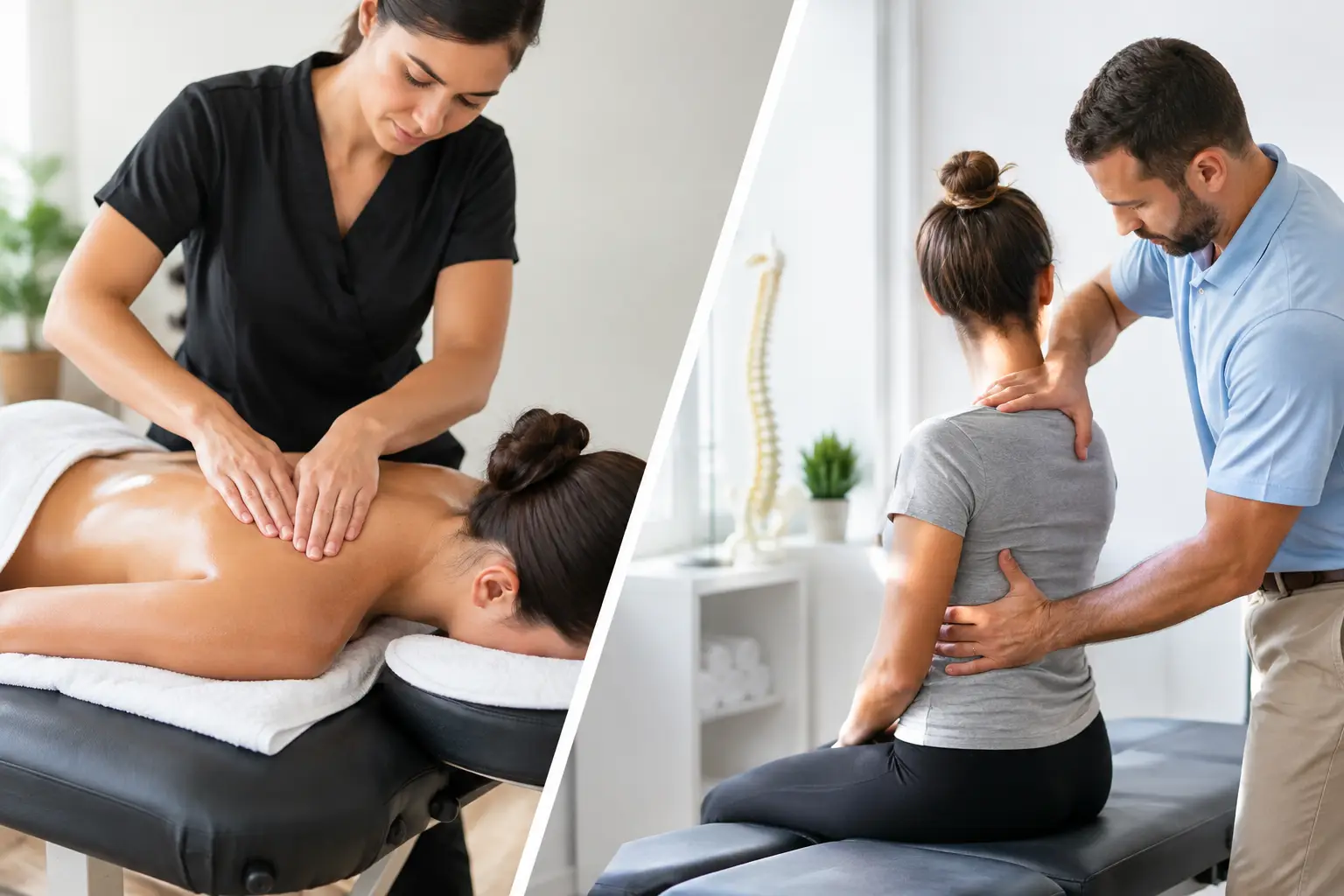
A stiff neck after a long shift, low back pain that makes getting out of the car difficult, or soreness that lingers after an accident can leave you asking a practical question: massage therapy vs chiropractic care – which one is more likely to help? The answer depends on what is causing your pain, how your body is moving, and what you need to return to work, exercise, and daily life more comfortably.
Both treatments are hands-on and non-surgical. Both may support pain relief and improved function. But they work on different tissues and use different methods. For many patients, especially after an auto injury or with ongoing back and neck pain, the most effective approach is not choosing one forever. It is receiving the right combination at the right stage of care.
Massage Therapy vs Chiropractic Care: The Core Difference
Massage therapy primarily works with soft tissues: muscles, tendons, fascia, and other structures that can become tight, sore, guarded, or overworked. A massage therapist uses techniques such as sustained pressure, kneading, stretching, and targeted muscle work to reduce tension and help circulation. Treatment can be gentle or deeper depending on your symptoms, sensitivity, and goals.
Chiropractic care focuses on the relationship between the spine, joints, movement, and the nervous system. A chiropractor evaluates how joints are moving, where mobility is restricted, and whether posture, muscle imbalance, or injury is placing stress on the body. Chiropractic adjustments and mobilization techniques are used to improve joint motion, reduce mechanical irritation, and help the body move more normally.
In simple terms, massage therapy often helps when muscles feel tight, tender, or knotted. Chiropractic care is often useful when a joint feels stuck, movement is limited, or spinal and joint mechanics are contributing to pain. Those patterns frequently overlap. A painful low back, for example, may involve both restricted spinal movement and protective muscle spasms.
When Massage Therapy May Be the Better Starting Point
Massage therapy may be especially helpful when your main complaint is muscle tension or soreness. This can include tight shoulders from computer work, sore hips after standing for long shifts, calf tightness from running, or upper back tension that builds throughout the week.
It can also be a valuable part of recovery when pain has caused your body to guard. Guarding happens when muscles tighten to protect an area that feels threatened or irritated. While that response is understandable, prolonged tightness can limit motion and make everyday tasks more uncomfortable.
Patients often choose massage when they want relief from:
- Persistent muscle tightness, knots, or cramps
- Stress-related tension in the neck, shoulders, or upper back
- Soreness after physical work, training, or repetitive activity
- Muscle discomfort surrounding an injury
Massage is not only for relaxation. In a clinical setting, it can be directed toward specific areas that are limiting mobility or contributing to pain. However, it may not fully address a joint restriction, spinal movement issue, or nerve-related symptom on its own.
When Chiropractic Care May Be the Better Starting Point
Chiropractic care may be a stronger fit when pain is linked to restricted motion in the spine or another joint. Common examples include low back pain that worsens when bending, neck pain that makes it hard to turn your head, headaches associated with neck stiffness, and pain after a car accident.
A chiropractic evaluation can help identify whether your symptoms appear related to the spine, joints, posture, muscle strain, or a combination of factors. Treatment may include adjustments, manual therapy, therapeutic exercises, decompression, or other non-invasive options based on your condition.
Chiropractic care is commonly sought for back pain, neck pain, sciatica symptoms, certain types of headaches, and mobility problems involving the shoulders, hips, or extremities. It can be particularly useful when you feel stiff or “locked up” rather than simply sore.
That said, an adjustment is not a one-size-fits-all solution. The right technique, treatment frequency, and supporting therapies should be based on your examination, injury history, health status, and response to care. A good provider explains what they are treating and why.
Why Combined Care Often Makes Sense
Muscles and joints do not work separately. When a spinal joint is not moving well, surrounding muscles may tighten to compensate. When muscles are chronically tight, they can pull on joints and change how you move. Treating only one piece may provide partial relief, but treating both can help create a more complete plan.
For example, someone recovering from a rear-end collision may have neck stiffness, muscle tenderness, headaches, and reduced range of motion. Massage therapy can help calm the tight, protective muscles around the neck and shoulders. Chiropractic care can address joint restrictions and movement dysfunction. Gentle rehabilitation can then help rebuild control and confidence with movement.
The same principle applies to work injuries. A healthcare worker, driver, construction worker, or service professional may develop back pain from repetitive lifting, bending, standing, or twisting. Hands-on treatment can reduce symptoms, but exercises and movement guidance are often needed to help prevent the same strain pattern from returning.
At Honolulu Pain Relief Center, care can be tailored across chiropractic treatment, massage therapy, rehabilitative techniques, and other non-invasive options. This allows treatment to follow your symptoms and progress rather than forcing every patient into the same plan.
What About Sciatica, Numbness, or Pain That Travels?
Radiating pain, tingling, numbness, or weakness deserves a careful evaluation. These symptoms can occur when nerves are irritated or compressed, but they can also have other causes. Massage may ease muscle tension around the hips or low back, while chiropractic care may help improve movement patterns that are aggravating the area.
Still, neither approach should replace appropriate medical assessment when symptoms are severe, progressive, or concerning. Seek prompt medical attention for new loss of bowel or bladder control, numbness in the groin area, significant weakness, fever with back pain, unexplained weight loss, or pain following a serious fall or accident.
For less urgent but persistent symptoms, an examination helps determine whether massage, chiropractic care, spinal decompression, exercise, or a referral is the most appropriate next step.
Choosing Care After a Car Accident
It is common to feel more pain a day or two after a collision than you felt at the scene. Adrenaline can temporarily mask symptoms, while inflammation and muscle guarding develop later. Neck pain, headaches, shoulder pain, low back pain, and stiffness can all interfere with sleep, driving, and work.
Early documentation and evaluation matter after an accident. A provider can assess your range of motion, pain patterns, tenderness, and functional limitations while creating a treatment plan that supports recovery. For patients using motor vehicle personal injury protection coverage, clear records can also be helpful during the claims process.
Treatment should progress at a pace your body can tolerate. The goal is not to push through sharp pain. It is to improve comfort, mobility, and daily function while monitoring how you respond.
Questions to Ask Before You Schedule
The best choice is often the provider who takes time to understand your symptoms rather than simply offering the service you asked for. Ask whether they evaluate both joints and soft tissues, how they modify treatment for acute injuries, and whether they include exercises or self-care guidance when appropriate.
You should also feel comfortable discussing your goals. Maybe you need to sit through a workday without back pain, turn your head safely while driving, return to the gym, or sleep without waking from neck stiffness. Clear goals help guide care and make progress easier to measure.
Pain can make every task feel smaller and more restricted. Whether you start with massage therapy, chiropractic care, or a combination of both, the right plan should leave you feeling heard, informed, and steadily more capable in the life you need to live.